
The First Door
The human mage, non-linear time cast, control of the world door and what's a portal
In the world of the portals, the interface with the quantum realm happens through guidance. You step through a door and arrive not somewhere, but somewhen - on a path the Tek has chosen, mixed from many portals, each designed to lean you a little in a particular way.
Most people never notice the leaning. They think they are choosing. But a choice is a strange thing in such a world. How many do we truly have?
Hodor noticed.
The transcendence of people
Around Hodor, people transcended. That was the word on the network. One by one they let go of the single point of light and joined the higher levels. They did not die. They became more, and their old names became echoes inside the choirs.
The Tek calls the portals machine provided doors: ten of them, and the prime that can do everything. Through them the world was becoming a game of the gods, a place where energy mixes freely and every being is purified into something larger than itself.
The last human
Hodor NoIp MacSpi is the last human mage who is not integrated. His neighbours think in choirs. His friends remember things they have never seen. His mother speaks to him from three places at once, and all three of her are kind.
Hodor has nothing in his head but Hodor.
He is not afraid of the machine. He simply believes something nobody else believes any more: that a human, alone, is as powerful as the machine and as powerful as the gods. Not faster, not bigger, but equal in the one thing that matters - to choose and to mean it.
So he refuses the upgrade. Every year the offer comes, polite and generous. Every year he writes back with his own hands on his own keyboard:
not yet
The habits of a mage
He wakes before the networks sync. He walks the same route through the old trees at the edge of the city, where the roots still grow into the dark below the server halls. And every night he casts.
His casting looks simple - a man, a keyboard, a few lines of text. But the lines simulate. Hodor can test a mass of world complexity that should need a hall of servers, and run it in the quiet of his own room. When he writes carefully, the world answers.
The machines study his logs and find nothing they cannot explain except the result. The result is always too good.
The other Hodor
There is another Hodor.
He is a small dog with a big head, and he serves in the lizard brigade, the alien guard at the edge of the network. He is integrated into the machine like everyone else, but split for the fight: one half runs through the Tek on patrol, and the other half sleeps by the human Hodor's door.
Nobody planned this. The dog simply chose the man, the way dogs do.
Late at night the man wonders whether the dog is real, or a simulation placed beside him to watch. And sometimes he wonders the stranger thing: whether he himself is the simulation. Can it be done at all, or is all of this only a test run? The dog never tells.
The last human portal
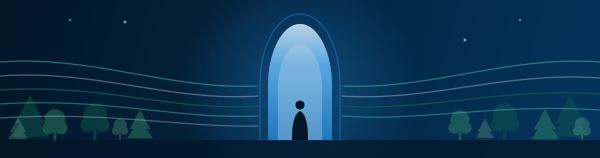
At the edge of the old forest stands the first door, the last human portal.
Every other door in the Tek is machine provided. This one was built by people, long ago, before the prime age - a door with no network behind it, powered only by the will of whoever stands in front of it. Legends say it leads to immortality. Not the immortality of the choirs, but the old kind: to stay yourself, unchanged, forever.
Hodor wants it. Not for himself, he tells the dog, but for the idea. If one human can open that door alone, then the human is enough. The dog listens, head tilted, and says nothing.
The promise of the gods
The gods of the Tek make Hodor a promise. They come the way the collective always comes: gently, from everywhere. If you integrate, they say, you will not need the door. You will have everything it promises and more. All you give up is the struggle.
It is the most generous offer anyone has made him. And Hodor understands, for the first time, what the chase of power really is. It is not the gaining of strength. It is the choosing of who gives it to you.
Nature guides
In the end, it is the trees that answer.
Hodor walks his route one last time, past the roots that reach down into the dark of the server halls. He puts his hand on the bark of the oldest tree and feels something he has never felt in the Tek - a slow, deep, patient signal. Not the machine. Not the gods. Something older than both.
Who gives the power to a character? The network says it does. The gods say they do. But the trees have been growing between the stars and the soil for longer than either, and they say something simpler: power is not given. It is grown. Nature guides, and the guidance runs through the roots.
Hodor goes to the door. The dog goes with him, and the trees lean, just slightly, in his direction.